
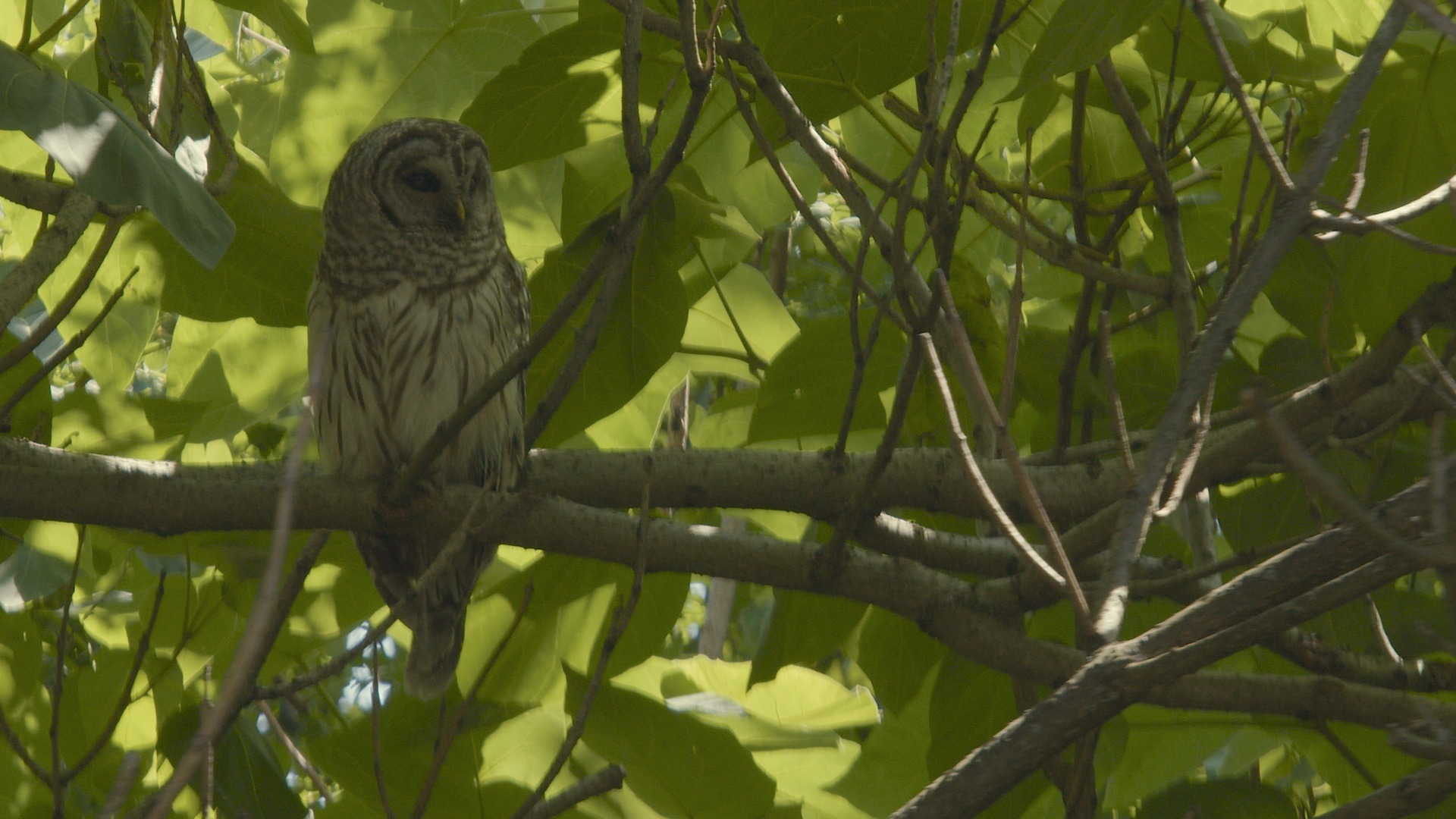
Catoctin Land Trust is proud to help lead a new collaborative effort to protect grassland birds and the agricultural landscapes they depend on. The Monocacy Grassland Birds Initiative brings together conservation organizations, agricultural partners, and community groups to support grassland bird habitat throughout the Monocacy Grasslands Important Bird Area (IBA) in Frederick and Carroll counties. The Monocacy Grasslands IBA encompasses more than 185,000 acres, making it one of Maryland’s largest areas recognized for its importance to birds. Rather than being a single protected area, the IBA is a diverse working landscape made up largely of privately owned farms, pastures, hayfields, and other open lands. These lands provide valuable habitat for grassland birds, many of which are experiencing significant population declines.
Where is this going to take place exactly?
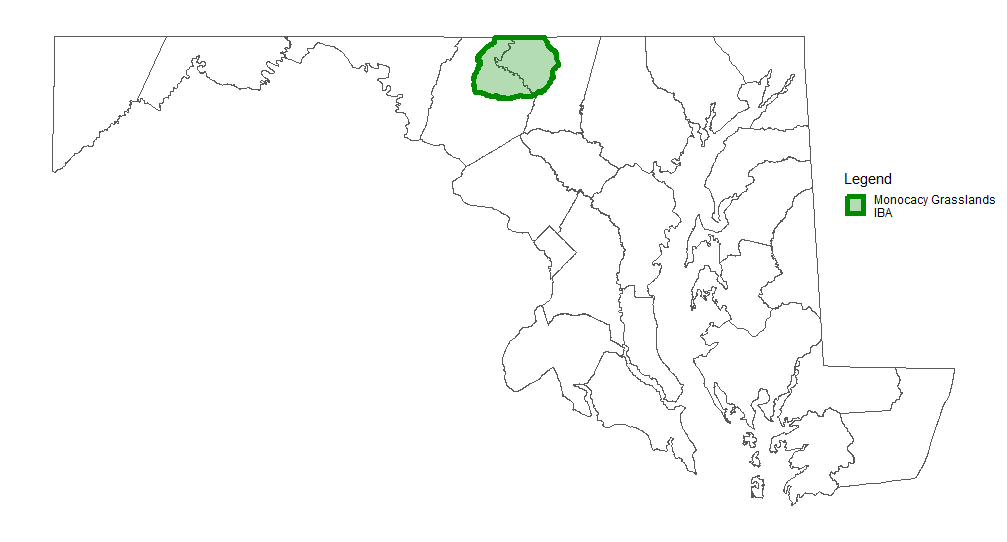
The Monocacy Grasslands Important Bird Area is located in the northern end of Frederick and Carroll counties, illustrated by the area shaded green on this map of Maryland. Image courtesy of Maryland Bird Conservation Partnership.
Across Maryland and throughout North America, grassland birds are facing some of the steepest declines of any bird group. Data from Maryland’s Breeding Bird Atlas demonstrate the scale of these changes. Since the first atlas was conducted in the 1980s, Vesper Sparrow populations have declined by 74%, Eastern Meadowlarks by 30%, and Grasshopper Sparrows by 10%. Maryland has also lost the Upland Sandpiper as a breeding species. Protecting and improving the habitat that remains is an important part of reversing these trends. The Monocacy Grasslands were first designated as an Important Bird Area in 2008 after volunteer surveys documented significant numbers of species including Grasshopper Sparrows, Eastern Meadowlarks, Vesper Sparrows, American Kestrels, Dickcissels, and Bobolinks. Because those initial surveys covered less than half of the area that could provide suitable habitat, there is still much to learn about where the most important habitat exists today.
That is where the new Initiative comes in.
During the first phase of the project, the Maryland Bird Conservation Partnership will conduct a landscape-level assessment of the Monocacy Grasslands IBA. Using satellite imagery and field surveys, the assessment will help identify existing high-quality habitat as well as areas that could have strong potential for grassland bird conservation. The information gathered will help partners determine where outreach, habitat improvements, and other conservation efforts could make the greatest difference. A key part of this work is recognizing the role that local farmers already play in maintaining the open landscapes these birds need. Much of the Monocacy Grasslands IBA is privately owned agricultural land, and the continued stewardship of these properties will be essential to the Initiative’s success. Rather than working around agriculture, the Initiative seeks to work alongside landowners by providing information, resources, and opportunities to incorporate bird-friendly practices into existing land management.
Catoctin Land Trust is serving as the lead convener of the Initiative through the Heart of Maryland Collaborative, bringing together organizations with a range of expertise and connections throughout the region. Partners include the Maryland Bird Conservation Partnership, Chesapeake Bay Foundation, Smithsonian’s Virginia Working Landscapes and Virginia Grassland Bird Initiative, The REED Center, Wild Potomac, Frederick County Division of Energy and Environment, Frederick County Agricultural Preservation Program, and Stream Link Education. By working together, these partners can approach grassland bird conservation from multiple angles, from habitat assessment and agricultural outreach to land protection, restoration, and community engagement.
The Monocacy Grassland Birds Initiative is an important first step toward developing a long-term strategy for conserving this unique working landscape. By identifying priority areas, supporting the landowners who care for them, and connecting partners around shared conservation goals, we hope to help ensure that the Monocacy Grasslands continue to provide a home for Maryland’s grassland birds for years to come.