The Catoctin Land Trust is excited to share an important milestone in our work to restore the Roop Branch Stream in New Windsor, Maryland: the final design for the project is complete! The project will restore approximately 7,127 feet of Roop Branch and its surrounding floodplain. The final design, prepared by Ecotone, Inc., is the result of extensive field investigations, historical research, geomorphic assessments, soil studies, hydrologic and hydraulic modeling, and natural resource inventories. The goal is simple: create a healthier, more stable stream while improving water quality and creating better habitat for wildlife.
The History of Roop Branch
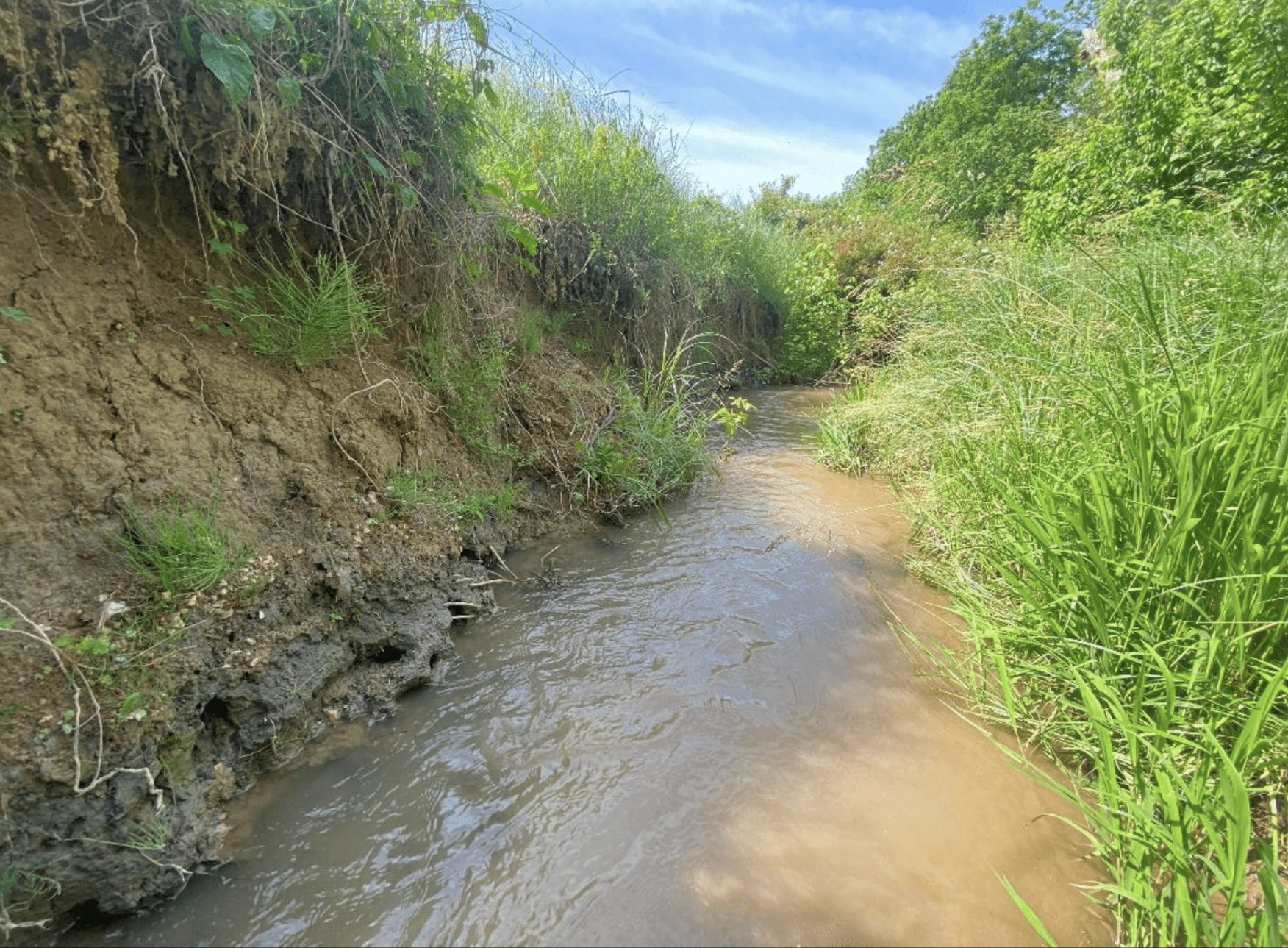
Like many streams in our region, Roop Branch has been shaped by decades of human activity. Historic mill dams and agricultural practices changed how water and sediment moved through the valley. Over time, large amounts of sediment built up in the floodplain. Today, parts of Roop Branch have eroding banks, an unstable stream channel, and limited connection to the surrounding floodplain. The floodplain also lacks the native trees and other vegetation that help keep streams healthy. When a stream is disconnected from its floodplain, more water and energy stays concentrated in the stream channel during storms. This can lead to erosion and make it harder for the stream and surrounding landscape to filter pollutants and provide habitat. The new restoration design is intended to change that.
The Work Being Done
One of the biggest parts of the project will be removing approximately 35,291 cubic yards of old, built-up sediment from the floodplain. In some areas, this means removing several feet of sediment to reconnect the floodplain with the natural soils and gravel underneath. This will allow Roop Branch to reconnect with its floodplain. Instead of forcing larger storm flows through a narrow, unstable channel, the restored stream will be able to spread water across the floodplain when water levels rise. This helps slow down floodwaters and reduce the amount of erosion taking place in the stream. The project will restore approximately 8.17 acres of floodplain, much of which is expected to develop into wetland habitat over time.
New Plantings
The restored floodplain won’t just hold water; it will become a much healthier place for plants and wildlife. The project includes planting native trees and shrubs throughout the restoration area. Over time, as the landscape becomes more heavily vegetated, it is expected to provide new forested and shrub wetlands. The design anticipates that up to 7.2 acres could become forested wetlands and another 1.14 acres could become shrub wetlands.
Native plants will also provide food and habitat for insects, pollinators, birds, and other wildlife. Proposed plantings include a variety of native grasses, sedges, and flowering plants. The project also includes the use of woody debris, such as logs, branches, and tree roots, throughout the floodplain. These materials will help slow floodwaters, provide wildlife habitat, and add organic material to the developing wetland.
While some trees will need to be removed to complete the restoration, the project is designed to result in a significant increase in forested area. Approximately 1.10 acres of tree clearing will be necessary during construction. In comparison, the project includes plans to reforest 10.17 acres of upland and floodplain areas. Tree protection and maintenance measures will also be used to help the new plantings become established. The long-term vision is a stream corridor with more native trees, healthier wetlands, and a much more diverse landscape.
Water Quality Improvements in the Watershed
Restoring Roop Branch will also help improve water quality. A healthier floodplain can act like a natural filter. When water spreads across the floodplain, plants, soils, and wetlands can capture sediment and take up nutrients before they continue downstream. The project is expected to reduce approximately 813 tons of sediment, 888 pounds of phosphorus, and 4,037 pounds of nitrogen each year. These improvements will benefit not only Roop Branch, but the larger watershed and, ultimately, the Chesapeake Bay.
The Roop Branch restoration is about much more than fixing a stream channel. It is about restoring the connections that make a healthy watershed work: between the stream and its floodplain, between wetlands and groundwater, and between native plants and wildlife. With the final design now complete, the project has taken a major step forward. The completed design provides the roadmap for turning this vision into a restored, healthier Roop Branch.
This project is supported through Chesapeake Bay Trust (CBT) Watershed Assistance Grant Program funding, and matching funds from the National Fish and Wildlife Foundation (NFWF). We could not be more appreciative of our grant funders, CBT and NFWF, and the landowners for partnering with us on this project! All this work could not be accomplished without their help and Ecotone, Inc.’s work in developing the final design.