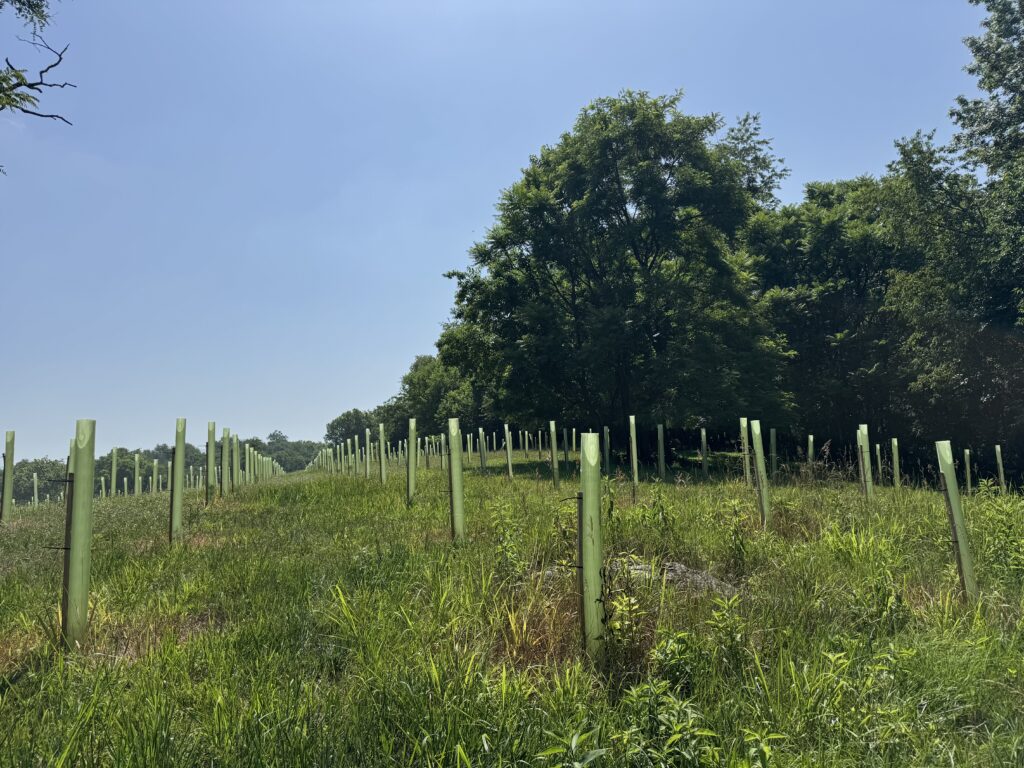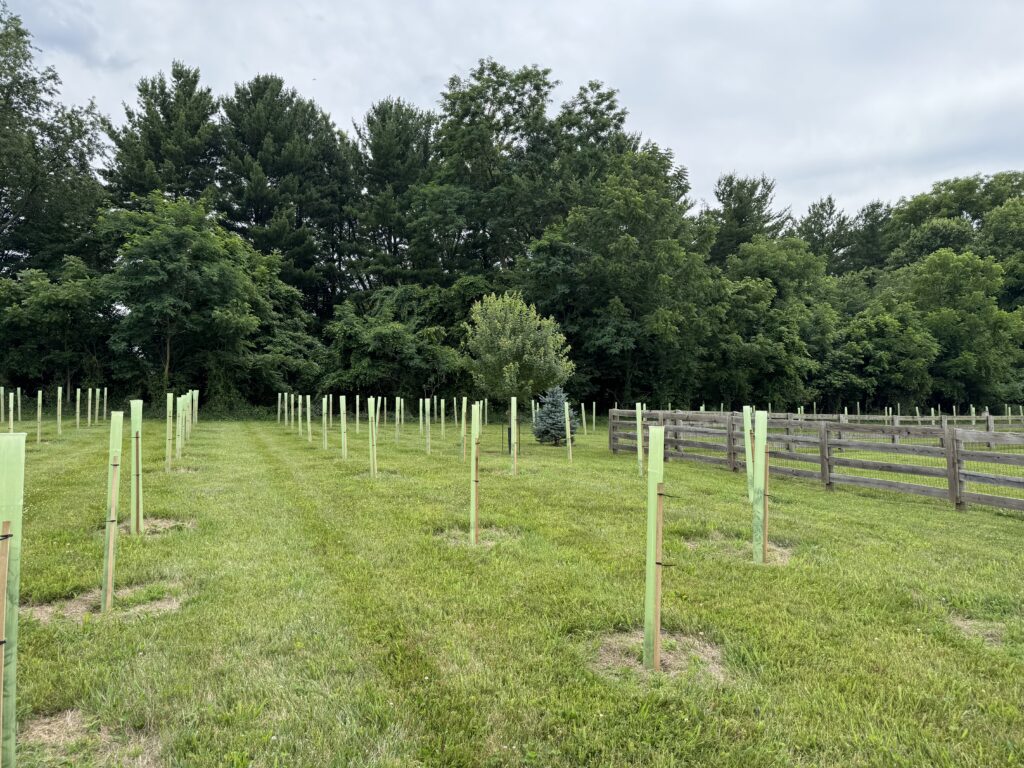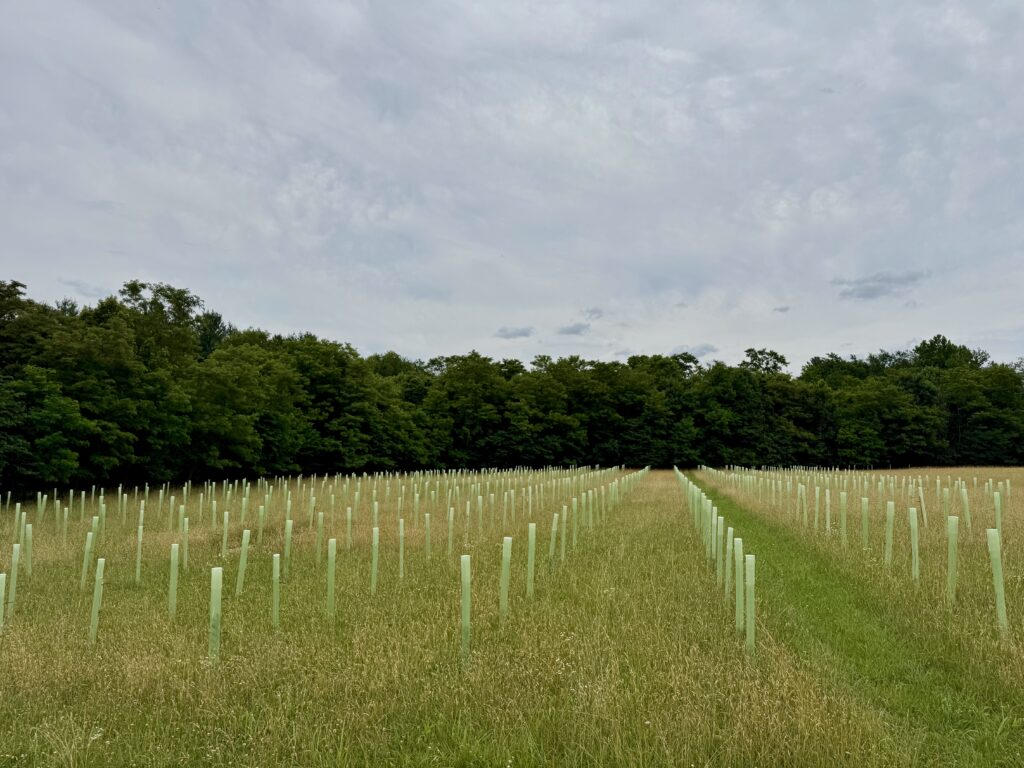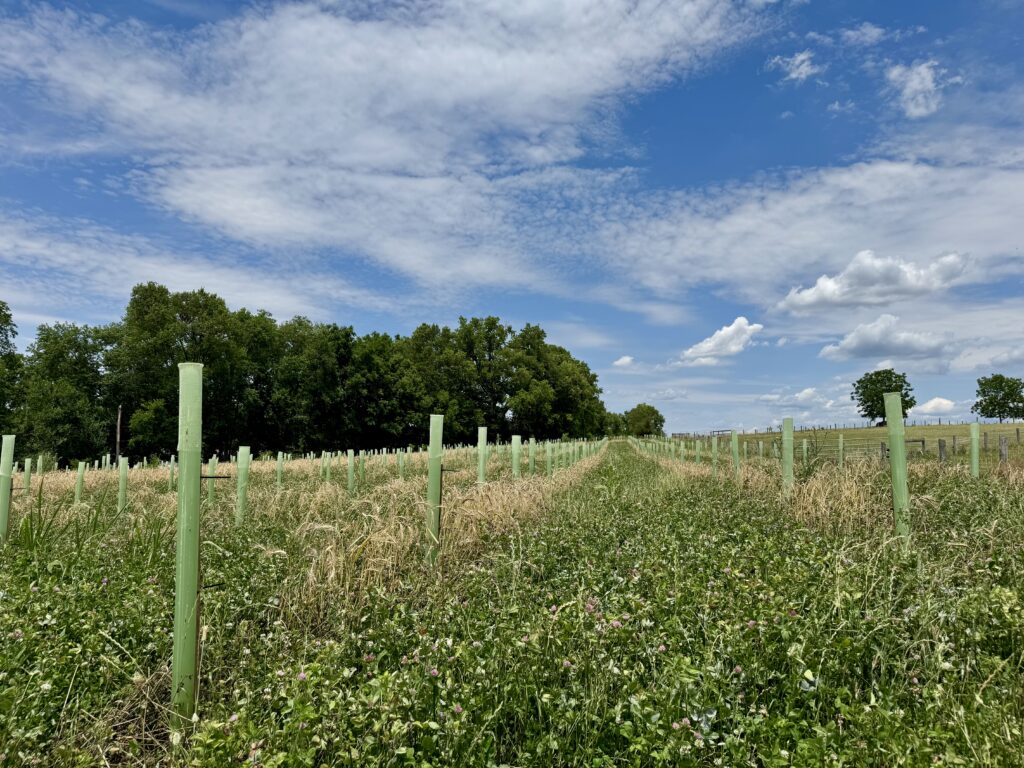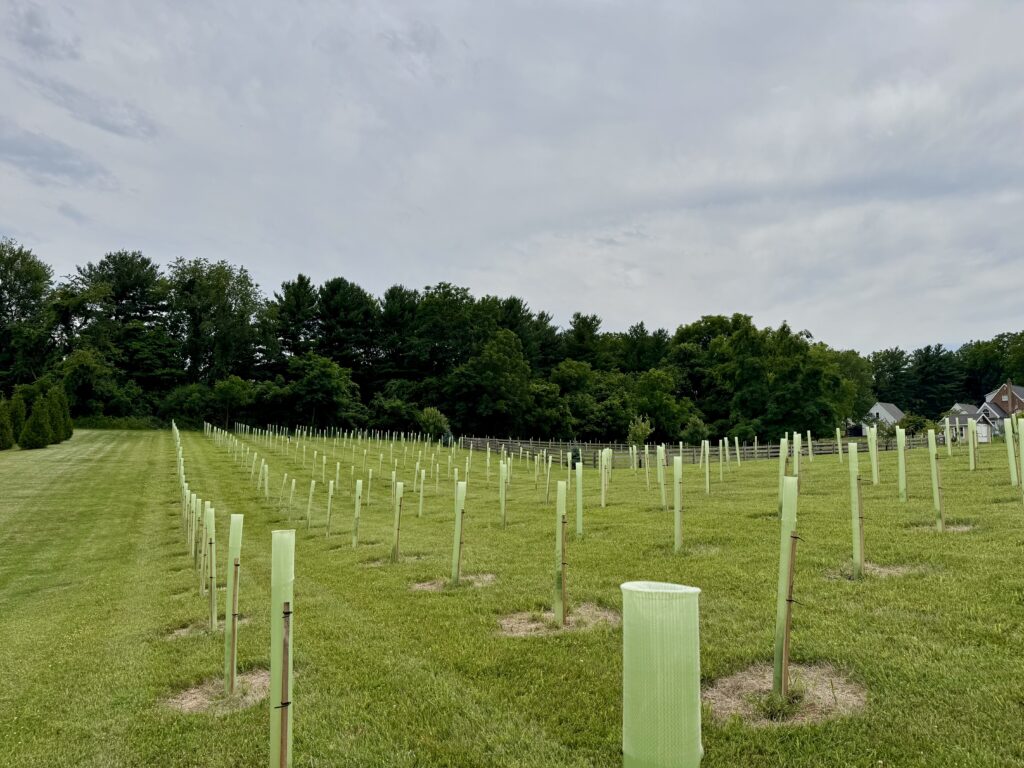
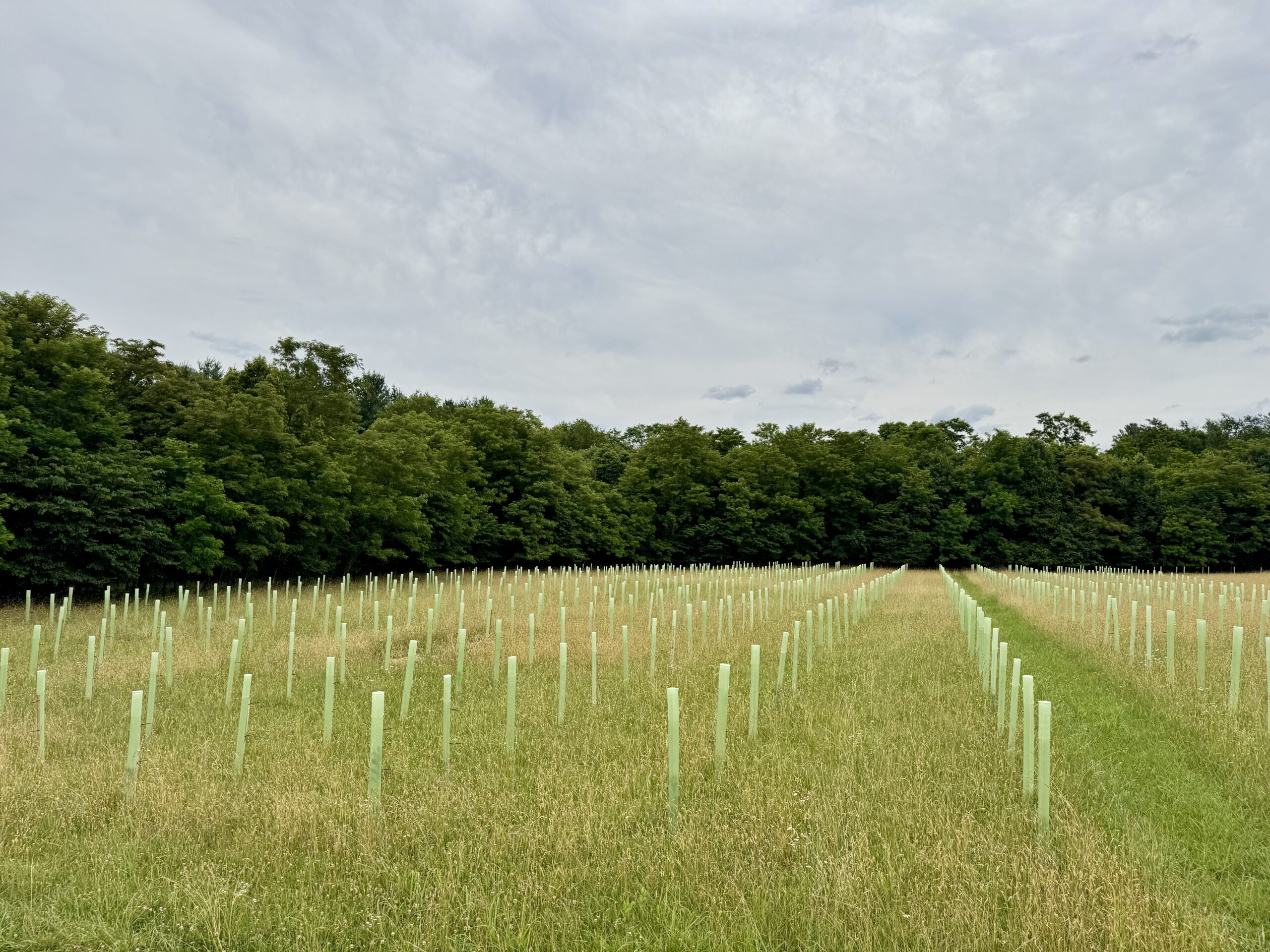
This spring marked the first planting season for the Antietam Watershed Afforestation Program (AWAP), and we’re excited to celebrate a successful start to this new initiative. Managed by Catoctin Land Trust with technical assistance from the Maryland Forest Service, the program resulted in nearly 13 acres of new native forest established across seven private properties throughout the Antietam Watershed.
Each planting brings us closer to our goal of planting 55 acres by the end of next year. Each planting represents more than just trees in the ground. These new acres of forest will help improve water quality, reduce erosion, provide valuable wildlife habitat, improve air quality, and strengthen the health and resilience of the Antietam Watershed for generations to come.
AWAP was created to make establishing new forests easy and accessible for landowners. Through AWAP, eligible landowners within the Antietam Watershed can receive a cost-free planting while making a lasting investment in their property and the environment.
Eligible landowners receive:
-
-
- 100% cost-free participation
- $500-$2,000 per acre in financial compensation (determined on a case-by-case basis)
- A custom planting plan tailored to their property
- Professional installation of native bare-root trees and shrubs
- Five years of maintenance following the planting
-
In return, landowners simply agree to keep the trees in place for at least 15 years. No conservation easement is required, and project sites can be as small as 0.75 acres.
While we are proud of what was accomplished during our inaugural planting season, this is just the beginning. There are still many opportunities to restore land throughout the Antietam Watershed, and we’re actively working with interested landowners to plan future plantings and bring us closer to our goal.
If you own land within the Antietam Watershed and are interested in participating, be sure to check out our AWAP page and fill out our interest form! We look forward to building on the success of our first planting season and continuing to restore the Antietam Watershed, one tree at a time.